Order before 2pm for next day delivery, or pre-book your date of choice. Delivery to Europe available from €23.99

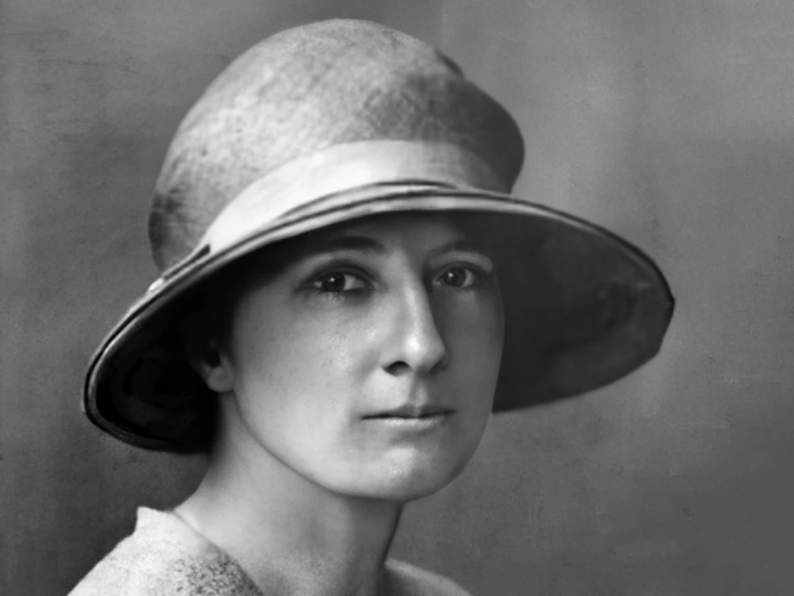
Eimhear Kuiper and Ina Boyle

Post Category:
Gift Occasions Minor
Eimhear Kuiper and Ina Boyle
BasketsGalore.ie • Agent: Eimhear Kuiper • Territory: Minor Gift Occasions
What do you do when nobody is watching?
That's not a question about what you get away with. It's a question about what you keep doing when there's no applause, no recognition, no external reward. It's the question that defined Ina Boyle's life, and it's the question that defines Minor Gift Occasions.
Eimhear Kuiper represents the smallest, least visible part of our business: gifts for moments that don't get celebrated publicly. No major holidays, no milestone birthdays, no grand occasions. Just small recognitions—thank you gifts, sympathy gestures, get-well tokens, housewarming presents. These occasions exist at the edge of the gift market, barely visible, often forgotten. But they happen constantly, and they matter to the people involved.
For this territory, we chose Ina Boyle. She composed in isolation for fifty years. She sent her scores to conductors who rarely replied. Her works were performed once, if at all, then disappeared. She kept composing anyway. Every day. Until she died.
• • •
Ina Boyle was born in 1889 at Bushey Park, Enniskerry, County Wicklow. Her father was a clergyman who made violins as a hobby. He taught her music; she started composing as a child. She studied with private teachers in Dublin, then began traveling to London for lessons with Ralph Vaughan Williams, who recognized her talent immediately.
From 1923 to 1939, she crossed the Irish Sea by steamship for those lessons. Vaughan Williams encouraged her to relocate to London, where performances and publishers were. She refused. She stayed in Wicklow, caring for her mother, her sister, and her father. They needed her. She composed every day in the family home, surrounded by the Wicklow countryside, alone.
In 1920 she won the Carnegie Trust award for her orchestral work The Magic Harp—the only woman selected by the prestigious scheme. It was performed once by the Bournemouth Symphony Orchestra. She was the first Irish woman to write a symphony, a concerto, and a ballet. Almost none of her major works received a second performance.
World War II ended her travels to London. She was cut off completely. Her mother died in 1931, her sister in 1938, her father in 1951. She continued composing. She sent scores to conductors, to choir directors, hoping for performances that rarely came. Vaughan Williams wrote to her in 1937: "I think it is most courageous of you to go on with so little recognition. The only thing to say is that it sometimes does come finally."
She composed until the end. Her final work was an opera, Maudlin of Paplewick, based on Ben Jonson. She died of cancer in 1967. Her music was forgotten. Her manuscripts sat in Trinity College Dublin, unperformed, for decades. Only in the 2010s did musicians begin rediscovering her work.

Why Ina Boyle for Eimhear Kuiper?
Because Minor Gift Occasions exist in the same space Boyle occupied: quiet, unnoticed, but persistent. Nobody celebrates "thank you gifts" as a category. There are no television commercials for sympathy hampers. Get-well presents don't get Instagram posts. These occasions happen in the margins, where visibility is low and recognition is absent.
But they happen constantly. Someone needs to say thank you. Someone needs to acknowledge grief. Someone needs to mark a small transition. These moments don't require grand gestures, but they do require attention. You can't automate them. You can't use a generic template. You have to recognize what the situation actually needs.
Boyle's career demonstrates what happens when you keep working without external validation. Most people stop. They need feedback, encouragement, signs that their effort matters. Boyle kept composing because the work itself mattered to her. She didn't stop when recognition failed to arrive. She adjusted her expectations and continued.
Minor Gift Occasions work the same way. This territory will never be our largest or most profitable. It operates at small scale with low visibility. But it serves real needs that other categories miss. Someone looking for a sympathy gift isn't browsing birthday hampers. Someone needing a housewarming present doesn't want a Christmas basket. The category exists because some occasions require specific recognition, even when they're small.
• • •

We are writing this in January 2026. The easiest business strategy is to focus on what's visible and measurable: Christmas, birthdays, major occasions. These drive volume, generate attention, produce clear returns. Minor occasions don't. They're scattered, inconsistent, hard to optimize.
But abandoning them would be a mistake. Businesses that only serve high-visibility needs leave gaps. Those gaps represent real people with real situations who deserve real attention. Serving those needs requires systems that work even when nobody's watching.
That's what Boyle did. She composed symphonies nobody performed. She wrote choral works that sat in drawers. She sent scores that weren't answered. She kept working because the work mattered, recognition or not. Fifty years of effort with almost no external reward. Then, decades after her death, musicians started performing her music. Orchestras recorded it. Her works are being rediscovered.
Vaughan Williams was right: recognition does come, sometimes, finally. But it comes to work that was built carefully even when nobody cared. It comes to people who kept going when stopping would have been easier. It comes to those who understood that some things matter whether they're celebrated or not.
The deeper purpose is practical. Life includes small moments that deserve recognition: someone helps you, someone grieves, someone moves house, someone recovers from illness. These moments don't fit major categories, but they're real. Serving them requires building systems that work at the margins, where visibility is low and volume is scattered. This is our contribution: an Irish hamper business, an Irish composer who worked in isolation for fifty years, and a belief that some things are worth doing even when nobody's watching.
Eimhear Kuiper. Ina Boyle. The quiet composer at the edge.
BasketsGalore.ie Agent Architecture
January 2026